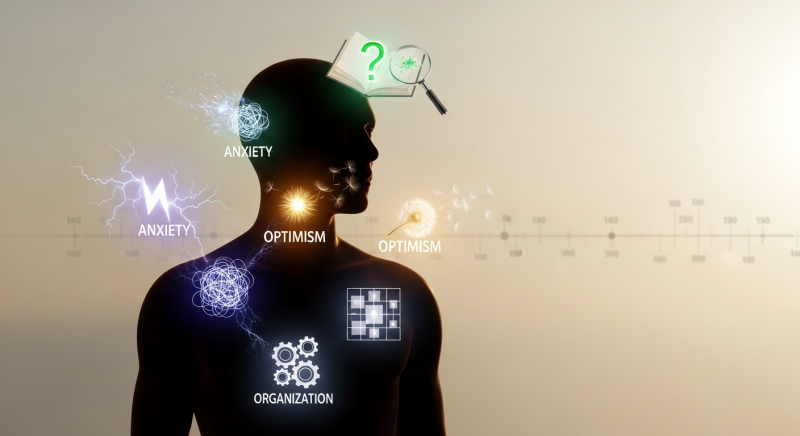
Are you naturally anxious, cheerful, sociable, or curious? According to recent research, your personality doesn’t just shape your mood or relationships — it may also affect how long you live. A large-scale study published in the Journal of Personality and Social Psychology has found that some traits may be linked to higher or lower mortality risk.
A massive study linking personality to lifespan
To explore this connection, researchers analyzed data from over 569,000 people tracked across nearly six million person-years. During this period, more than 43,000 deaths were recorded. The study focused on five core personality traits — neuroticism, extraversion, openness, agreeableness, and conscientiousness — to determine their relationship with lifespan.
Previous research shows that personality is shaped roughly 40% by genetics and 60% by environment. But which traits could increase your risk of dying earlier, and which might help you live a longer, healthier life?
Neuroticism is linked to a higher risk of death
The researchers assessed participants using standardized personality questionnaires, then analyzed which traits correlated with mortality risk. The most harmful trait turned out to be neuroticism — the tendency to experience negative emotions such as anxiety, fear, or depression. People who scored high in neuroticism were found to have a 3% higher risk of death compared to others.
This effect was strongest among adults under 65, suggesting that chronic stress and emotional instability may take a toll on health earlier in life. The authors note that neuroticism can influence stress hormones, sleep quality, and coping behaviors — all of which contribute to long-term health outcomes.
Conscientiousness may help you live longer
On the other hand, some traits seem protective. Conscientiousness — being organized, responsible, and disciplined — was associated with a 10% lower mortality risk. People who tend to plan ahead, follow routines, and take responsibility for their actions often maintain healthier lifestyles and make safer choices.
Extraversion, or being outgoing and sociable, was also linked to a 3% decrease in mortality risk. Social interaction and emotional connection are known to support both mental and physical health, reducing isolation and boosting overall well-being.
As for openness and agreeableness, researchers found no direct link to longevity once biological and behavioral factors such as smoking, exercise, and blood pressure were considered. These lifestyle elements partially explain the connection between personality and lifespan.
A breakthrough in understanding longevity psychology
Dr. Máire McGeehan, assistant professor of psychology at the University of Limerick and lead author of the study, described the findings as “a major step forward” in understanding how personality influences longevity. “Our way of thinking, feeling, and behaving isn’t only related to life satisfaction or social relationships — it’s also tied to how long we live,” she explained.
Her colleague, Dr. Páraic S. Ó’Súilleabháin, added: “This is groundbreaking research that will pave the way for future studies exploring how our psychological patterns affect long-term health and survival.”
Important limitations to consider
While the results are promising, the researchers emphasized a few limitations. Most of the data came from high-income countries with largely white populations, meaning the findings can’t yet be generalized worldwide — especially to low-income regions or culturally diverse communities. Moreover, the study relied on a single personality model, though several frameworks exist, each offering different insights.
Future research will need to explore these nuances further to confirm how personality and health interact across cultures and environments.
Key takeaway
While we can’t change our genes, understanding our personality can help us make healthier choices. Managing anxiety, building strong social connections, and staying organized could all support a longer, more fulfilling life. As the study shows, longevity isn’t just about biology — it’s also about mindset and behavior.